Monkey Beach Phi Phi: What to Know About the Monkeys
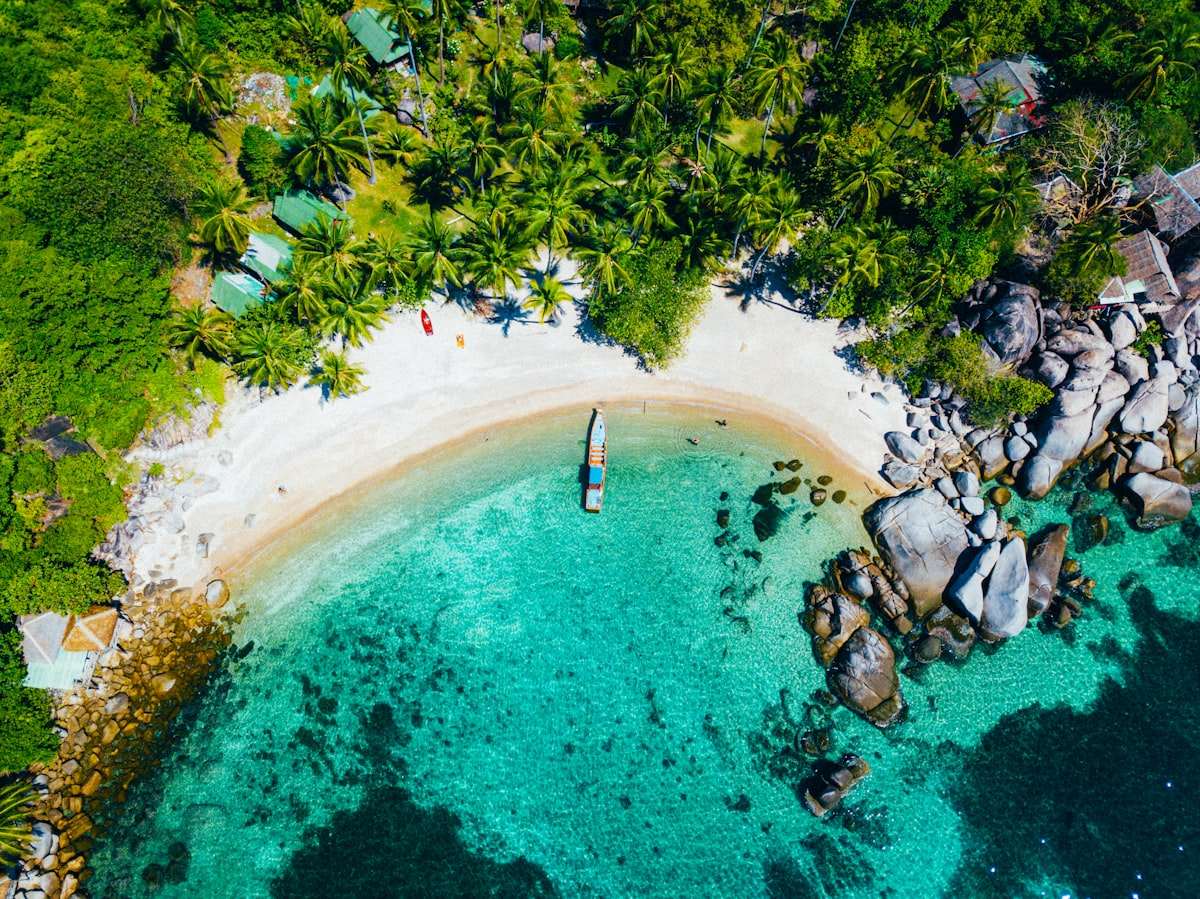
Monkey Beach is a small, pretty cove on Phi Phi Don and a regular stop on Phi Phi day trips from Phuket. It is named after the troop of wild long-tailed macaques that live in the forest behind the sand and come down to the beach when boats arrive. For many visitors it is a fun few minutes. For the monkeys, and sometimes for visitors, it can go wrong when people get too close or bring out food.
This guide explains what the stop is like, why you should never feed the monkeys, how to stay safe and what to do if you are scratched or bitten.
What Is Monkey Beach?
Monkey Beach is a short stretch of white sand backed by cliffs and jungle on Phi Phi Don, the larger of the two main Phi Phi islands. It is a short boat ride from Tonsai, the island's main village, and most visitors arrive by speedboat or longtail boat as part of a tour. When the sea is calm, the water in front of the beach is usually clear and shallow.
Monkey Beach on Our Tours
Monkey Beach is one of the stops on our Phi Phi, Maya Bay and Khai Island speedboat tour, along with Khai Nai, Viking Cave, Pileh Lagoon and Maya Bay, and it is also on the route of the private Phi Phi speedboat charter. The stop is short. Depending on the tide, the sea and your guide, the boat may pull up to the sand or stay just offshore for viewing and photos. You never have to get off the boat if you would rather watch from a distance.
About the Monkeys
The monkeys are long-tailed macaques, also called crab-eating macaques. They are common across Southeast Asia and live in troops with a clear social order. In the wild they eat fruit, leaves, insects and, near the shore, crabs and shellfish. They are good climbers and capable swimmers.
The macaques at Monkey Beach are used to people, but they are not tame. They are curious, quick and bold, especially when they think someone has food. Large adult males in particular can defend their group and may threaten or chase people who come too close.
Why You Should Never Feed the Monkeys
You may see other visitors doing it. Please do not. Feeding wildlife is against national park rules in Thailand, and it harms both the monkeys and the people who come after you.
- It damages their health. Chips, sweets, bread and soft drinks are bad for macaques and can cause dental problems, obesity and digestive illness.
- It makes them aggressive. Monkeys that link people with food learn to grab bags and snatch things from hands, which leads to scratches and bites.
- It spreads disease. Close contact increases the risk of infections passing between monkeys and people in both directions. Macaques can carry infections that are serious for humans, including rabies and, very rarely, herpes B virus.
- It upsets the natural balance. Handouts change how the troop forages and can support more monkeys than the island could feed naturally.
How to Stay Safe at Monkey Beach
- Keep your distance. Watch from the boat, or stay several meters away on the sand. Never try to touch, hold or pose with a monkey.
- Put everything away. Sunglasses, hats, phones, water bottles and plastic bags all attract attention. Zip them into a bag or leave them on the boat.
- Keep food out of sight. Do not eat or open snacks on the beach. Monkeys recognize packaging and the rustle of a bag.
- Avoid direct eye contact. Staring can be taken as a threat.
- Do not show your teeth. A wide, toothy smile can look like a threat display to a macaque.
- Stay calm if one approaches. Do not run, shout or wave your arms. Back away slowly and show that your hands are empty.
- Keep children close. Small children are at eye level with an adult macaque and more likely to be scratched. Hold their hands on the sand.
- Be careful in the water too. Macaques swim, and they may come to the water's edge near people.
If a Monkey Grabs Something or Bites
- Let go. Do not wrestle a monkey for your belongings. A pair of sunglasses is not worth a bite.
- If you are scratched or bitten, wash the wound straight away with soap and plenty of clean water for about 15 minutes, and tell your guide.
- See a doctor the same day. A doctor will assess whether you need a rabies vaccine course or other treatment. Do not wait to see whether the wound looks bad.
- Keep your paperwork. Medical records and receipts help with insurance claims. See our guide to travel insurance for island tours.
Is Monkey Beach Worth Seeing?
Opinions are mixed. Many visitors enjoy seeing wild monkeys against a backdrop of cliffs and turquoise water. Others find the scene of habituated monkeys waiting for boats less charming than they expected. Either way, it is a short stop on a day that also includes Pileh Lagoon, Maya Bay and snorkeling. Enjoy it from a respectful distance and you will have the best experience, and so will the monkeys. Our Phi Phi Islands guide covers the other stops.
Photography Tips
- Use your phone's zoom or a longer lens from the boat rather than getting close.
- Do not use flash near the monkeys.
- Skip the selfie. Turning your back on a monkey while holding out a phone is exactly how things get grabbed.
- Keep your camera strap around your wrist or neck.
Being a Responsible Visitor
The best thing you can do for the monkeys is simple: watch, do not feed, do not touch and take your rubbish with you. If you see someone feeding the monkeys, let your guide know. The same rules apply at temples, viewpoints and other places around Phuket and Phang Nga where macaques live close to people. If you are traveling with children, our guide to island tours with kids has more tips for boat days.
Frequently asked questions
Are the monkeys at Monkey Beach dangerous?
They are wild animals and can scratch or bite, especially if people have food or get too close. If you keep your distance and your belongings put away, the risk is low.
Can I feed the monkeys bananas or fruit?
No. Any feeding, even fruit, teaches them to approach people for food and is against national park rules.
Do I have to get off the boat at Monkey Beach?
No. You can watch from the boat. Whether the boat lands on the sand depends on the tide, the sea and your guide.
What should I do if a monkey bites me?
Wash the wound with soap and water for about 15 minutes, tell your guide and see a doctor the same day to check whether you need rabies treatment.
Popular tours to book
You've read about it. Now experience it. Daily departures, instant confirmation, free 24h cancellation.
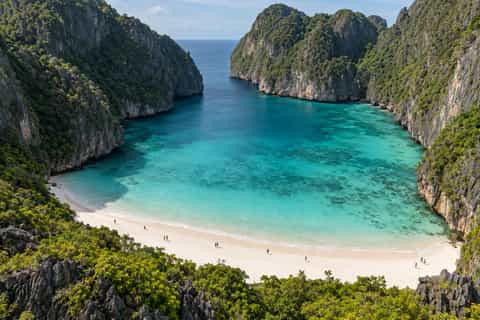
Phi Phi, Maya Bay & Khai Island by Speedboat
3 islands, 7 stops in one day by speedboat: Khai Nai, Monkey Beach, Viking Cave, Pileh Lagoon and Maya Bay. National park fee, breakfast, halal buffet lunch, snorkeling and paddle board included.
฿3,100
per adult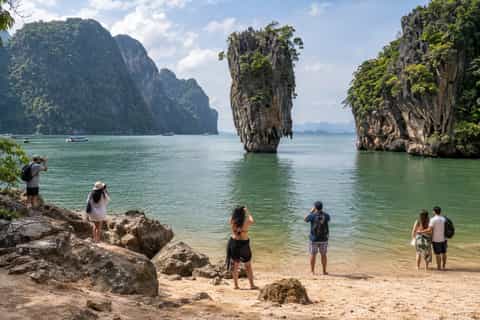
James Bond Island & Phang Nga Bay by Speedboat
Full day in Phang Nga Bay by speedboat: sea canoe into the Hong Island lagoon, Koh Panyee floating village with Thai buffet lunch, James Bond Island, Ice Cream Cave and Naka Island.
฿3,500
per adult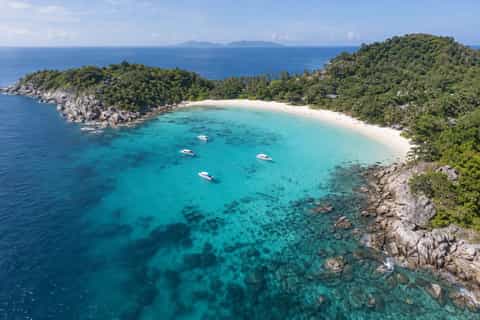
Raya & Coral Island Snorkeling Tour by Speedboat
Two islands in one easy day: Coral Island beach time, then snorkeling at Racha (Raya) Island with a seaview buffet lunch. Hotel transfer, snorkel gear and a licensed guide included.
฿2,400
per adult