Bioluminescent Plankton in Phuket: Where and When to See It
Few things at the beach feel as magical as glowing water. You drag a hand through the shallows and it leaves a trail of blue sparks, and every small wave lights up as it breaks. This is bioluminescent plankton, and it does appear around Phuket. The catch is that it cannot be booked, scheduled or promised. This guide explains what it is, the conditions that improve your chances, where to look and how to stay safe at night.
What bioluminescent plankton is
The glow usually comes from dinoflagellates, tiny single-celled organisms that drift in the sea. When the water around them is disturbed, a chemical reaction inside each cell releases a brief flash of blue-green light. Scientists think it helps protect them from being eaten by startling predators. One common species in warm coastal waters, Noctiluca scintillans, is often called sea sparkle.
Each flash lasts only a moment, so the light is strongest where the water is moving: breaking waves, splashes, footsteps and paddle strokes.
Is it guaranteed in Phuket?
No. Plankton gathers in patches that come and go with currents, wind and water conditions. You might see a bright display one night and nothing the next on the same beach. Sightings are reported around Phuket at different times of year, but there is no reliable season or calendar. Treat it as a lovely bonus if it happens, not something to build your trip around.
Conditions that improve your chances
- Darkness. This matters more than anything. A bright moon washes out the glow, so the nights around the new moon, or the hours before the moon rises, are best. A moon phase app helps.
- Distance from lights. Beach bars, resort lights and streetlights make it very hard to see. Walk to the darkest part of the beach.
- Calm, sheltered water. Small, gentle waves are easier to watch than big surf.
- Warm water and nutrients. Plankton blooms are often linked with warm water and nutrient-rich runoff after rain, which is one reason sightings are sometimes reported in wetter months.
- Patience. Give your eyes at least 10 to 15 minutes in the dark without looking at a phone screen. Faint sparks become much easier to see.
Where to look around Phuket
Quieter beaches with little light
Long, less developed beaches in the north of the island, such as Mai Khao and Nai Yang, are much darker at night than the busy resort beaches. They are part of Sirinat National Park, and sea turtles have nested on Mai Khao, so keep lights low and leave the beach as you found it.
Calmer bays in the south
In the south, bays such as Nai Harn and the area around Rawai can have calm water on still evenings. Find a spot away from the restaurants.
Busy resort beaches
Patong, Karon and Kata have so much light at night that the glow is rarely noticeable, although quieter corners late at night sometimes surprise people.
On the water
Some independent operators run evening sea canoe trips in Phang Nga Bay that finish after dark, and paddlers sometimes see sparks of light around their paddles. We do not sell evening or night trips. Our day tours, including the James Bond Island and Phang Nga Bay tour, return in the late afternoon.
How to look for it
- Walk along the water's edge and watch the wet sand as each wave pulls back. Glowing specks often show up there first.
- Crouch down and sweep your hand through ankle-deep water, or splash gently with your feet.
- Shuffle your feet as you wade, which also warns any rays resting on the sand that you are coming.
- Watch the line where small waves break. If there is plankton, the crest will flicker blue.
Staying safe at night
- There are no lifeguards at night. Stay in shallow water, never swim alone and do not swim after drinking.
- Respect the monsoon. From roughly May to October, the west coast beaches can have big waves and strong rip currents. Do not swim when red flags are up, by day or by night.
- Be jellyfish aware. Jellyfish, including dangerous box jellyfish, are found in Thai waters. Read our jellyfish safety guide before night swims.
- Protect your feet. Wear water shoes on rocky beaches, and bring a small torch for walking, switching it off when you look for the glow.
- Avoid discolored water. Some plankton blooms, sometimes called red tides, can turn the water reddish or brown by day and may irritate the skin. If the water looks discolored or smells bad, stay out.
Photographing the glow
Bioluminescence is faint, so photos need more light than your eyes do.
- With a camera: use a tripod, a long exposure of several seconds up to around 30 seconds, a high ISO and the widest aperture your lens allows. Focus manually, since autofocus struggles in the dark, and use a timer or remote to avoid shake.
- With a phone: use night mode and rest the phone on something solid. Results vary a lot between phones.
- Never use a flash. It ruins the shot and your night vision.
See the sea life by day too
If glowing plankton sparks your interest in the sea, the daytime reefs are just as rewarding and far more predictable. On the Raya and Coral Island snorkeling tour you snorkel in one of the bays of Racha Yai, which has some of the clearest water you can reach on a day trip from Phuket. For evenings, our guide to sunset cruises from Phuket and our beach guide have more ideas.
Frequently asked questions
When is the best time to see bioluminescent plankton in Phuket?
There is no reliable season. Your best chance is on a dark night around the new moon, on a quiet beach with calm water and little artificial light.
Is it safe to touch or swim in glowing water?
The glowing plankton itself is usually harmless in small patches. The bigger risks at night are waves, currents, jellyfish and rocks, so stay shallow and never swim alone. Avoid water that looks discolored by day.
Can I see it on a tour?
We do not sell night trips. Some independent operators run evening canoe trips in Phang Nga Bay, but sightings are never guaranteed.
Can I photograph it with my phone?
Sometimes. Use night mode, keep the phone completely still and expect mixed results. A camera on a tripod with a long exposure works far better.
Popular tours to book
You've read about it. Now experience it. Daily departures, instant confirmation, free 24h cancellation.
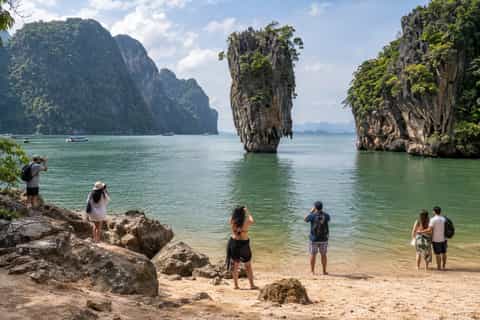
James Bond Island & Phang Nga Bay by Speedboat
Full day in Phang Nga Bay by speedboat: sea canoe into the Hong Island lagoon, Koh Panyee floating village with Thai buffet lunch, James Bond Island, Ice Cream Cave and Naka Island.
฿3,500
per adult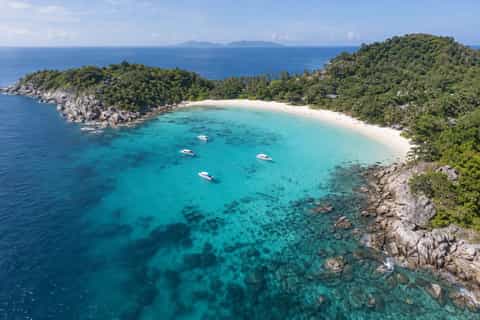
Raya & Coral Island Snorkeling Tour by Speedboat
Two islands in one easy day: Coral Island beach time, then snorkeling at Racha (Raya) Island with a seaview buffet lunch. Hotel transfer, snorkel gear and a licensed guide included.
฿2,400
per adult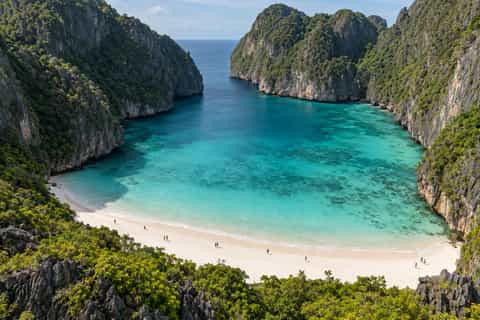
Phi Phi, Maya Bay & Khai Island by Speedboat
3 islands, 7 stops in one day by speedboat: Khai Nai, Monkey Beach, Viking Cave, Pileh Lagoon and Maya Bay. National park fee, breakfast, halal buffet lunch, snorkeling and paddle board included.
฿3,100
per adult