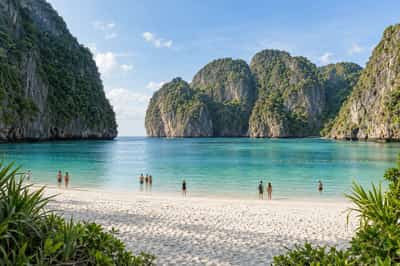
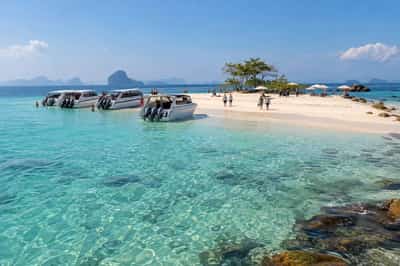
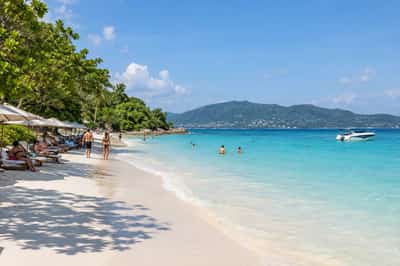
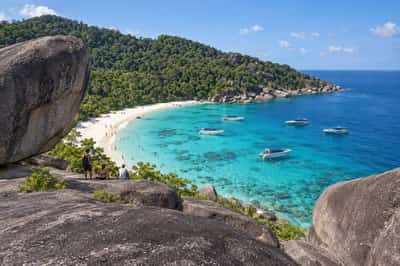
Racha Yai, often written Raya or Rayah, is a green island south of Phuket with some of the clearest water you can reach on a day trip. Its bays are sandy, the bottom drops away gently and the reefs attract snorkelers and divers all year. This guide explains what makes Racha different from the famous limestone islands, how to get there, the best bays and how to plan a relaxed day.
Racha Yai at a glance
There are two Racha islands. Racha Yai ("big Racha") is the one day trips visit. It has beaches, a few resorts, restaurants and walking paths. Racha Noi ("small Racha") lies further south, has no beach facilities and is mostly visited by dive boats. When people say Raya Island, they mean Racha Yai.
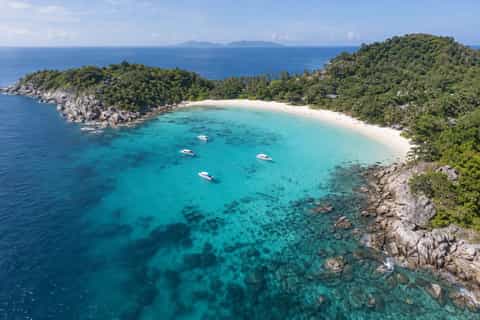
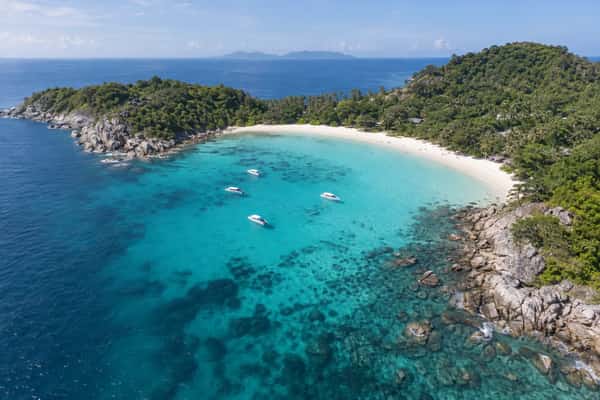
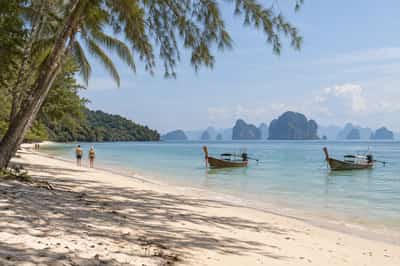
Racha Yai is a granite island rather than a limestone one, so you will not see sheer karst cliffs. Instead there are rounded boulders on the headlands, forested hills and bays of fine white sand. Because it sits in open sea, well away from river mouths, the water is often very clear.
How to get there from Phuket
Speedboat from Chalong Pier
Speedboats leave from Chalong Pier on Phuket's south coast. The direct crossing usually takes around 30 to 45 minutes, depending on the sea. On a combined tour with Coral Island, each leg is shorter and the day feels unhurried.
Our Raya and Coral Island tour
The Raya and Coral Island snorkeling tour starts with hotel pickup and coffee at Chalong Pier. The speedboat visits Coral Island first for beach time, then continues to Racha for snorkeling at Patok Bay, Lah Bay or Siam Bay (the guide picks the calmest, clearest bay on the day). Lunch is a buffet at a seaview restaurant on Racha, followed by free time at Patok Bay before the return to Chalong in the afternoon. Mask, snorkel and life jacket are included, and fins can be rented on board.
Private speedboat or dive boat
A private speedboat lets you choose your bays and timing. Certified divers can join dive boats from Chalong, which visit both Racha Yai and Racha Noi.
Best time to visit
Racha Yai is visited all year, but conditions change with the seasons:
- November to April: calm seas, sunshine and the best visibility. Peak season is December to March.
- May to October: the southwest monsoon brings swell and wind. Many days are still fine, especially in the morning, but the crossing can be rough and trips are sometimes cancelled. The guide will choose the most sheltered bay for snorkeling.
Our snorkeling visibility calendar goes month by month.
The bays of Racha Yai
Patok Bay
The main bay on the west side of the island. It has a horseshoe of white sand, very clear water and restaurants along the beach. Most boats arrive here, and it is where you spend free time on our tour.
Lah Bay
A smaller bay used for snorkeling stops, with reef along the edges and generally fewer people than Patok Bay.
Siam Bay
On the northeast side of the island. It is often quieter and is a good snorkeling choice when the wind makes the west side choppy.
What to do on Racha
Snorkeling
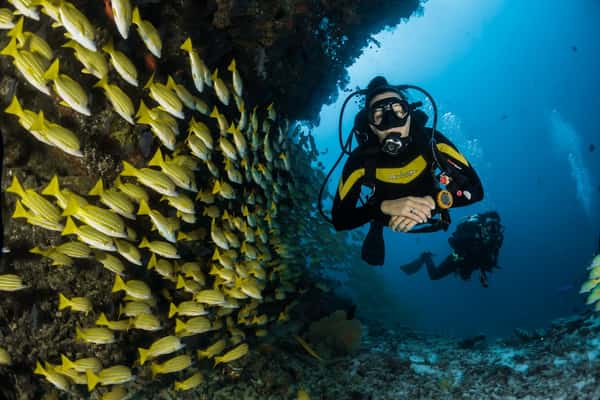
Racha's reefs have plenty of colorful reef fish close to the surface. Clownfish in anemones are a favorite with children, and parrotfish and schools of small fish are common. Sightings vary every day. Snorkel gear and life jackets are provided on our tour.
Diving
Racha Yai is one of the main training areas for divers from Phuket because its bays are sheltered and sandy. Try-dives and courses are arranged through dive centers, not on our snorkeling tour.
Beach and walking
After lunch there is time to swim from the beach, relax in the shade or walk a short way along the paths behind Patok Bay. Wear shoes for the paths, and do not wander far in the midday heat.
Practical tips
- Fees: Racha Yai is not part of a marine national park, so there is no national park fee on the standard day trip. Check your booking for what is included.
- Fins: fins help strong swimmers cover more reef, but beginners are often happier floating in a life jacket. On our tour fins can be rented on board.
- Seasickness: the crossing is in open water, so take seasickness tablets before departure if you are prone to it. See our seasickness tips.
- Pregnancy: pregnant guests cannot join our Raya and Coral Island tour.
- Bring: reef-safe sunscreen, a rash guard, a hat, a towel and a dry bag. See what to bring.
- Currents: listen to the guide's briefing and stay inside the snorkeling area. Currents can be stronger off the headlands.
Respect the reef
- Never stand on coral. If you get tired, float on your back or swim to the sand.
- Do not touch or chase fish, and do not feed them.
- Keep fins off the reef. If you are not confident with fins, snorkel without them.
- Use reef-safe sunscreen, or cover up with a rash guard.
- Take all rubbish back to the boat.
Is Racha better than Phi Phi?
They are different days. Phi Phi has the dramatic cliffs, Maya Bay and Pileh Lagoon, with a longer crossing and more crowds. Racha has clearer water, better snorkeling and a slower pace, with shorter boat rides from Chalong. Families and anyone who wants proper time in the water often prefer Racha. See also Koh Racha: Phuket's hidden gem and our Racha and Coral Island day trip guide.
Frequently asked questions
Is Raya Island the same as Racha Island?
Yes. Racha Yai, Raya and Rayah are all names for the same island. Racha Noi is a separate, smaller island further south.
How long is the boat ride to Racha Yai?
Usually around 30 to 45 minutes by speedboat from Chalong Pier, depending on sea conditions.
Is Racha Island good for snorkeling?
Yes. It has some of the clearest water within easy reach of Phuket, with reef fish close to the surface in several bays.
Can I visit Racha Yai in the rainy season?
Often yes. Trips run all year, but the crossing can be rough between May and October and some days are cancelled for safety.
Is there a national park fee on Racha?
No. Racha Yai is not part of a marine national park.